
01 / OBSERVE↗

BIOLOGICAL IMAGING
Imaging & visualization
Methods for viewing biological structures and examining organization at different scales.
Computational biology, medical software, physiological signal processing and models grounded in anatomy, physics and reproducible science.
In modern life sciences, technical systems help translate raw observations into information that researchers can interrogate. Our technology interests span biological visualization, digital signal analysis, modeling and dependable research data workflows.
The descriptions below outline areas of exploration. They do not imply that specific instruments, clinical systems or proprietary platforms have already been developed or validated.
Tools can expand what is observable, but evidence and experimental design determine what can reasonably be concluded.
Methods for viewing biological structures and examining organization at different scales.
Exploring time-series data, variation, noise and the limits of measurement.
Using computational representations to frame and evaluate biological hypotheses.
Thinking systematically about traceability, documented methods and reproducible analysis.
Research is strongest when technology supports biological interpretation rather than replacing it.
 SCIENTIFIC EVALUATION / HUMAN CONTEXT
Medical information is more than a dataset. It represents real anatomy, physiology, interpretation and clinical processes that demand clear safeguards.
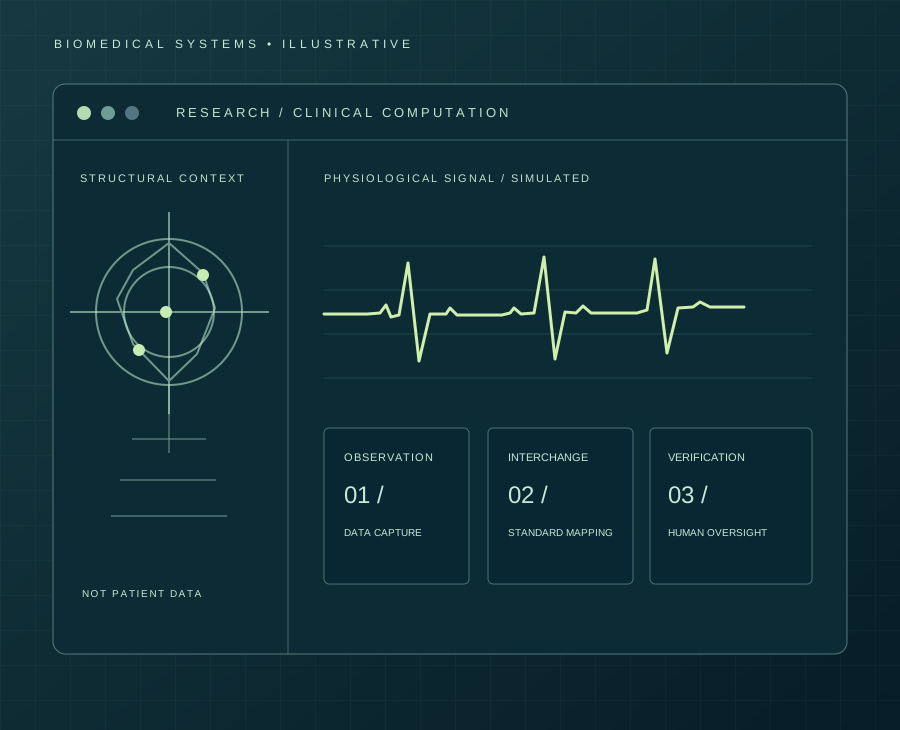
Scientific software engineering includes well-defined health data structures, validation of exchange workflows, image processing, numerical analysis and reviewable documentation.