
Anatomical & physiological context
Organ systems, physiological observations, medical vocabulary and structured clinical interpretation.
STRUCTUREPHYSIOLOGYTERMINOLOGY
Exploring how anatomy, physiology, medical information standards and carefully engineered software can support the responsible study of healthcare systems.
Medical computation is not just code. Clinical data carries anatomical meaning, physiological context and real-world consequences. Responsible systems begin by understanding how health information is captured, exchanged, checked and interpreted.
Our public materials explore methods and principles rather than announcing operational hospital systems, a regulated medical device or a clinical service.
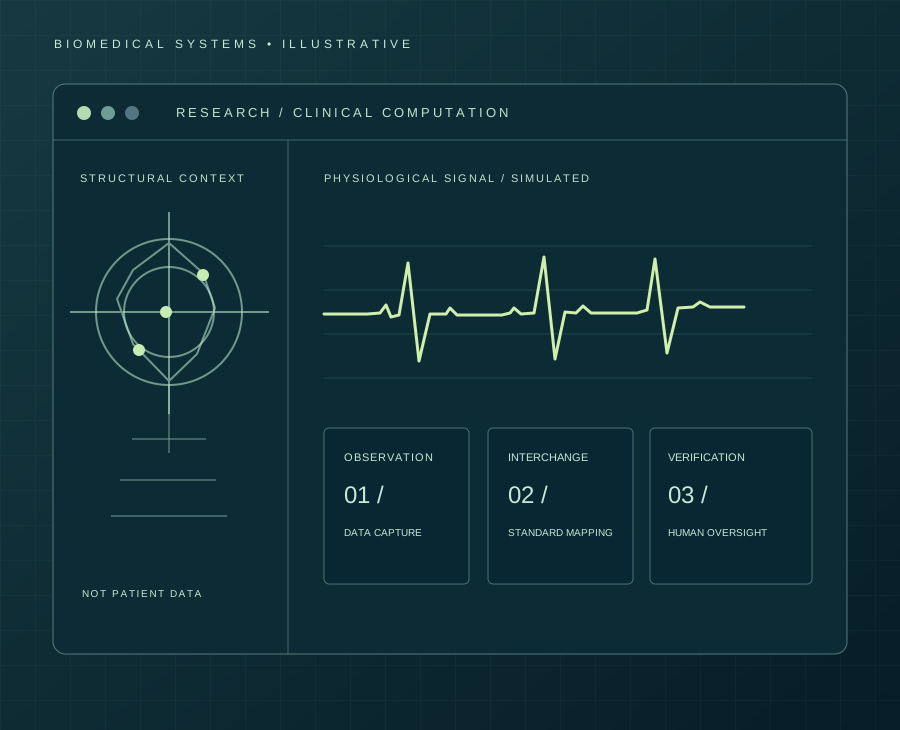 FIG. 04 / SIMULATED RESEARCH VISUALIZATION
Clinical software needs scientific context, interoperability, validation, privacy and clear human oversight.
Organ systems, physiological observations, medical vocabulary and structured clinical interpretation.
General standards and workflows around HL7 v2, FHIR, imaging exchanges and information integrity.
Simulation, numerical analysis, reproducibility, testing, cybersecurity and transparent evaluation.
Acquire context-rich biological or clinical data.
Apply terminology, standards and validation.
Interpret using documented quantitative methods.
Assess uncertainty, limits and human implications.
CONCEPTUAL WORKFLOW ONLY. No patient records, live device feeds or diagnostic decisions are displayed.